

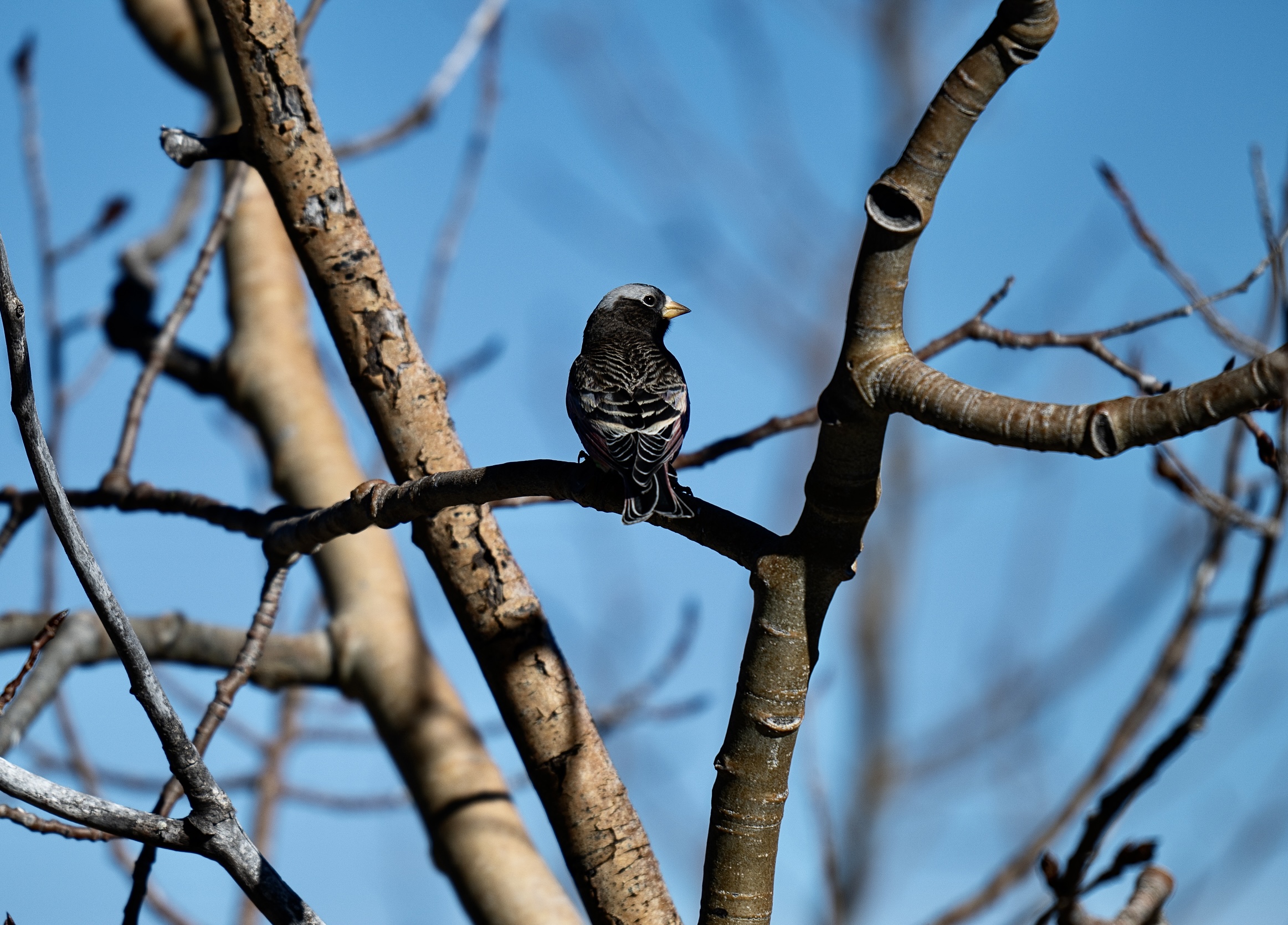
“What what you do if no one was watching?” That was the question I was asked. “Well,” I answered. “I don’t really have much of an audience, so if no one was watching I’d be doing the same thing I’m doing now.” What is that you ask? Wandering around with a camera and a notepad recording the world around me. But being questioned about this did make me have a hard think about what we see around us.
Many of the best photographers in history had no market for their work.
There were no galleries or museums showing photography. There were barely any outlets for photography at all, and photography was also considered a pirate industry. Just something to be used to further the work and careers of “real” artists, like painters. And yet, these early pioneers kept making pictures. Why? Why would you purposely risk life and limb for no financial gain and no chance at fame? When I ask older photographers the most common answer is “I couldn’t stop.” “I just had to do it.”
I went to photojournalism school, and when I ask former classmates if any of us thought about or spoke about fame or fortune, I get mostly laughter in return. One colleague, someone who went on to be a quite successful photographer, told me, “Not only did we never think about fame or fortune, none of us even thought we would ever make a living in photography.” I’m reminded of the saying about mountaineers, “The conquistadors of the useless.” And ya, that’s how I feel about most photographers. I don’t mean this in a bad way, only that they would be mired in their photographic obsession, regardless if anyone paid attention. Lost to the possibility.
But this is the “Show Me Age,” where “What am I going to DO with these images?” is a question that gets asked on a minute-by-minute basis, often by entirely untrained photographers with no knowledge of history or the industry itself. In other words, “How am I going to gain from these pictures?” It is not enough to cherish the experience, make a print or two and move on. I find this truly bizarre. It would be like me picking up a basketball, making a few buckets, and then asking “How am I going to profit from my basketball skills?” Were I to do this, you’d probably say I was delusional. “What makes you think you can play?” You’d ask. And rightly so.
But with photography and the toxic lure of fame and fortune, well, anyone with a camera learns to turn it on then ask “What’s my revenue stream?” I was with an accomplished person recently, someone new to me. At least three decades of teaching. A least two more decades of refined knowledge about a different subject, the same subject that brought he and I together. Once he found out I worked as a photographer for several decades he began asking about making money with his camera. He admitted he was new to it but thought maybe he could strike it rich. “Just shoot,” I told him. “You want to ruin all this, ruin the thing you love?” “You’ve been doing this for years without ever needing acknowledgement. You don’t need the money. Why?” Turns out, YouTube had fogged his view of the world, at least temporarily. It happens. And it happens to the best of us.
Yesterday, I spent six hours on the top of Sandia Peak.
Waiting. Watching and waiting. During the winter months, three types of Rosy Finches overlap on this ONE mountain at ONE feeder. This was my third year looking for the finches. The first year I saw them at distance but they never reappeared. Last year I didn’t see a single one, but this year I finally found my beauties. And beautiful they are. A range of color and palette that forces one to stop and pay attention. Surrounded at the top by fellow birders, all far more skilled than I. Oregon, Michigan, India, Bangladesh, New Mexico, etc. All waiting for the finches.
I will use one of these images as a chapter head in the ongoing New Mexico project. Unless I eventually make something better. I will sit on these until the project is complete. I’ll make my single copy of the book, study it, make another to refine the jagged edges. I will use the book as a message. I will watch as people open it and consume it. This is not a bird book. This is a wider story. One that is about US as a people, and our relationship with the planet and each other. You will not be able to define the book. You might try, out of frustration or otherwise, but you will be wrong.
There is no real audience for this work. There is no market for this book. This is no real financial value to these images, as many, many others have trekked to the same mountain top to photograph the same finches. But that’s not the point. The point is to find something you love. Story, adventure, subject, idea and then practice as much as you possible can. Learn, practice, learn, practice. Forget the expect, the want, the need, and the payoff. If it’s meant to be it will be.
Someone said “I can’t believe you had to wait for six hours for three minutes of photography.” I responded, “I didn’t have to wait, I GOT to wait.” Being there was the reward. It is, after all, a location that provides a 360-degree of the place I call home. It is astoundingly beautiful. And six hours was plenty of time to learn from my fellow birders and to think about what this little world means. What’s next? Where do I go from here? How much is enough? “There are geniuses all around us,” he said. “But many of them are hidden doing mundane things.” “You would never know.” I am NOT calling myself a genius. I’m saying that those among us who are don’t always need you to know they are a genius. That’s the point here. There doesn’t always have to be an endgame. The world will turn.

Comments 19
It is my conviction that photography is good for me. It helps me sharpen my observational skills, exercise my creativity, document my exploration, and work on self-discipline. I can do all of this without an audience.
I’ve been sitting along the Shonai River recently between Nagoya and my smaller city, just in the spot where you can’t really hear the cars in the distance. The area attracts oriental greenfinches, warblers, kingfishers, buzzards, and an occasional osprey among many other kinds of wildlife that you wouldn’t notice unless you looked closely. Apart from uploading to iNaturalist and eBird I’ve kept the majority sat on my hard drive (or printed a few) doing nothing. I’m happy with that. The world doesn’t need any new bird photos from me but it’s still a great way to relax, learn about the wildlife, and pass the time.
Have a great 2025. It was great to finally meet you this year.
Author
Oh man, now I want to go there. I didn’t get much time to bird in Japan…
It’s surprising to see some green tags on those little ankles — I wonder who’s tracking what!
Author
State…
I’ve come to think that people can roughly be divided into two groups. First, those interested in results, things, profit, and status. Second, those who rather care about process, experiences, and rituals. Let’s only consider the second group, because you and the audience of this blog (including me) belong to this group. I can fully relate to what you wrote – the satisfying experience of a photographic excursion, and the rewarding sense of gratitude because of this. Commenter Christopher Harper already mentioned observational skills, which I would describe as an increased awareness for the environment if I’m out with my camera. But how does the camera accomplish this in the first place, why do we enjoy taking pictures? Probably depicting the world we live in (“Lebewelt”) could be a defining trait of man; just consider the cave paintings from the dawn of our species. In German there is still the saying “etwas auf Film bannen” for “making a photograph”. “Bannen” means “to banish”, in the sense of “Geister bannen” (“to banish ghosts”) – so “etwas auf Film bannen” can roughly be translated as “to banish something inexplicable by taking its picture”. But before this gets too metaphysical, don’t question it but enjoy the ride!
Always good light to you, Dan, and the audience around here for 2025!
Author
Ghost Bannisher. That’s a movie. Or Steve Bannon Doucher. Could be a series. Same to you. Good light in 2025/
Photography keeps me balanced in a very unbalanced life.There are tugs and pulls in multiple, oftentimes conflicting directions. Photography,as I do it, brings me back into balance. I enjoy wandering, getting in touch with the spiritual part of me, then making something beautiful of what I see. And I enjoy putting it out in the world to let others see what I see.
Author
That’s about as good a use as I’ve heard. Good on ya.
I would’ve waited that long, too. I’ve waited quite a while to capture some eastern bluebird before. That’s the joy with birding. Patience is key. And so worth it after you finally snap the first shot.
Author
Yes, the final snap is always fun.
Maybe this is why I so rarely submit my short stories…
Author
The “submit” button changes everything.
I had a crisis of photography a few years ago. The social media culture left me with feelings of being left behind because I didn’t post on social media and I wasn’t making money from my camera. I didn’t even like developing my photos and I certainly wasn’t going to print undeveloped ones. What a loser was I? I lost my way. But I kept watching my favorite YouTubers because, while I didn’t pick it up as much anymore, I really did love my camera. Joe Edelman kept pushing about finding your why and so I kept pondering. It didn’t crystallize until I watched a talk from Joe McNally and he said the magical words, “You have to be in love with the click.” I was in love with the click, the joy of seeing the world through my photographic eye and capturing the things I want to keep before it’s gone. That was my “why”! It didn’t and doesn’t matter if anyone sees or enjoys my work. To me, it doesn’t even matter if I never download or print my photos. I just love going out and seeing the world and photographing things that bring joy to me. I am content on the fact I will always be just a “backyard photographer.” Thank you, Daniel, for being you and being brave and willing to share yourself with the world. Happy New Year!
Author
Social breaks everyone. EVERYONE. In the words of John Rambo, ‘There are no friendly civilians.” You are fortunate. Got out before it ruined things. Making snapshots, doing “backyard,” as long as it means something to you is all you need.
@Sherie:
I once heard that Henri Cartier Bresson would say something along those lines too, that he would still go out and “click” even if he wouldn’t have film in his camera just because he loved to frame up these little moments in the rectangle of his viewfinder, not thinking about what “stays” as a photograph but enjoying the experience of getting it.
Just found it on my shelf again. It’s from a eleven part documentary series on DVD about HCB.
So yes, I think too the “thrill” of photographing when conditions are just quite right is what it’s about, altough there’s also great satisfaction in “making it last” as a print.
Author
Oh ya, print is the ONLY way. At least for me.
“I didn’t have to wait, I GOT to wait.”… I like this quite a bit, thank you for sharing. I think it was Minor White who taught that you don’t need to find a subject. Rather, the subject will find you. Your phrase here isn’t exactly the same intent but it does imply having as much comfort with being as with constant doing. Our minds frequently strive for the latter (doing). Thanks for listening. 🙂
Author
Take an hour to sit and watch. Anything. If you squirm, you know you have work to do.