


When it comes to bang for the buck, nothing beats a Trade Book. (Now known as paperback and hardcover books.) I absolutely love this format. #70, uncoated, Standard Color Paper, softcover, matte, 6×9. This might be my fav thing, actually. But let me explain what this is. The city of Chefchaouen is known as “The Blue City,” or “The Blue Pearl.” You might have seen it in 5,000,000,000 Instagram feeds as the vultures have fully descended on the city. As you will see, there are no Instagrammers, other humans, or even animals in my photographs because I got up early specifically to avoid anyone else.
I knew I was going to make this book sample before I got to Morocco.

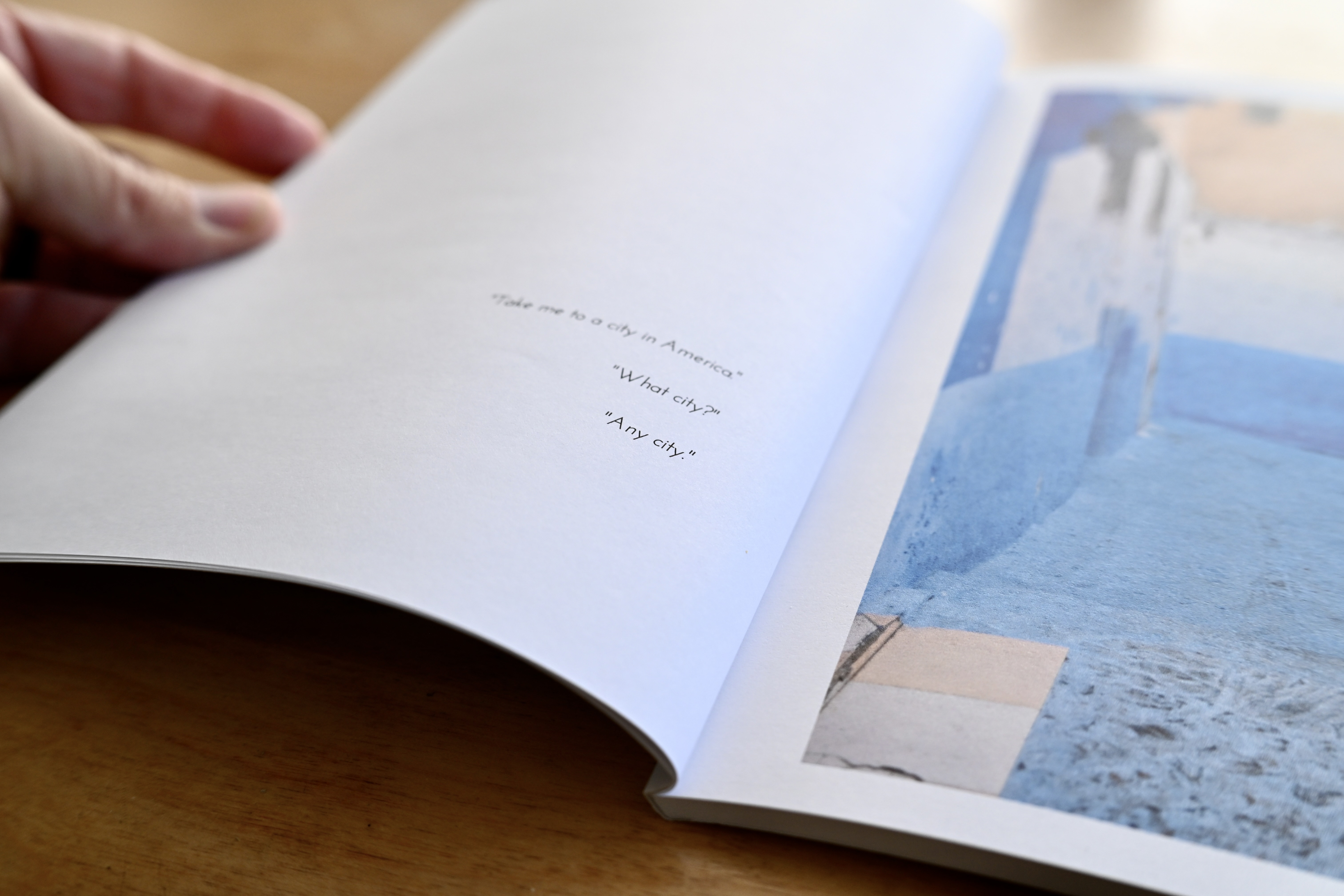
Yes, you read this correctly. I ALWAYS HAVE A STORY. Before I leave for another country, I always have at least one story in mind. In Morocco, I had several. I knew that Chefchaouen would make a good “mini-theme” that would also make a beautiful Trade Book sample. Simple. A quote from a conversation I had with a kid at a gas station, and all vertical, 16×9 photographs, all confined to the right-hand page. Open anywhere and consume.
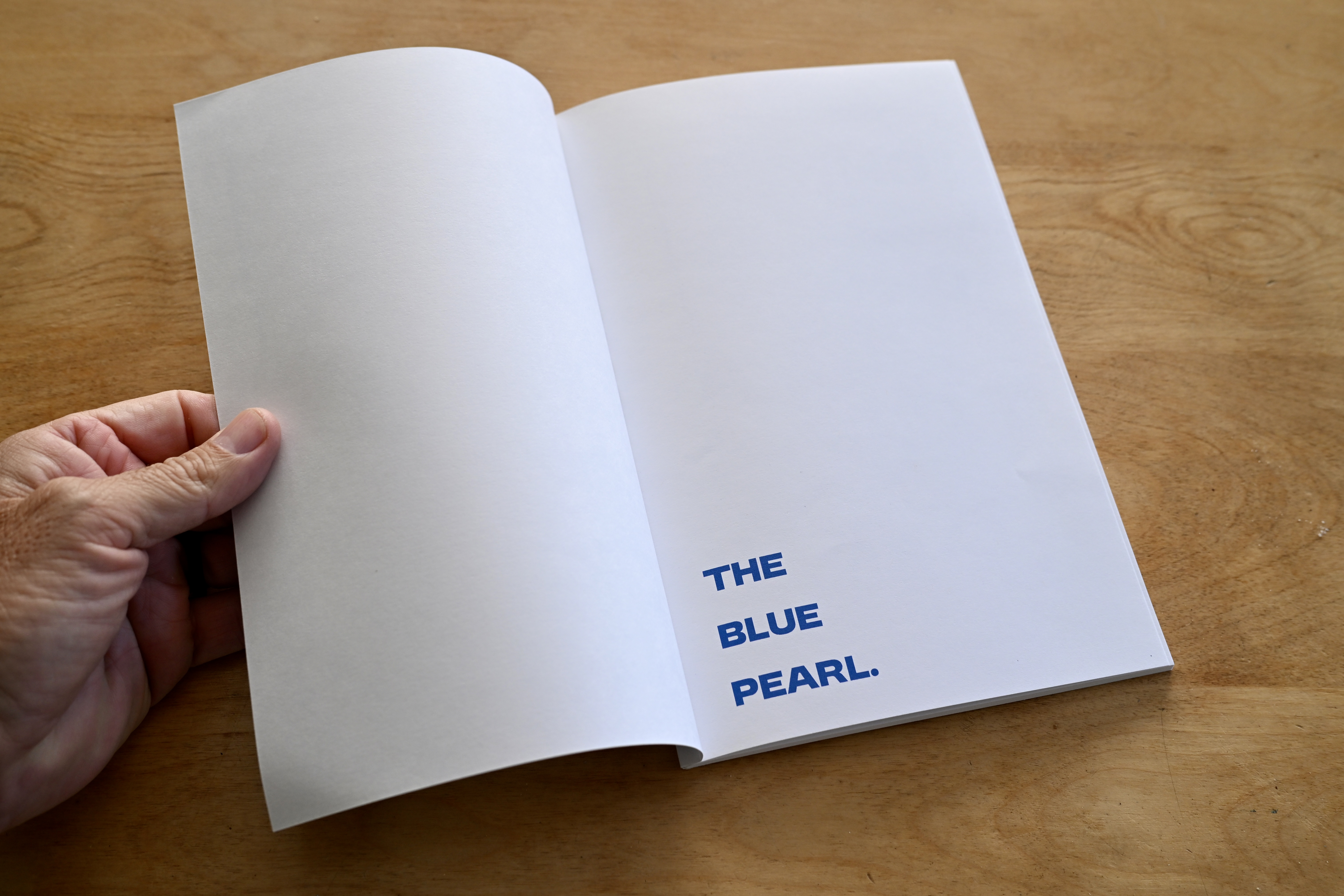
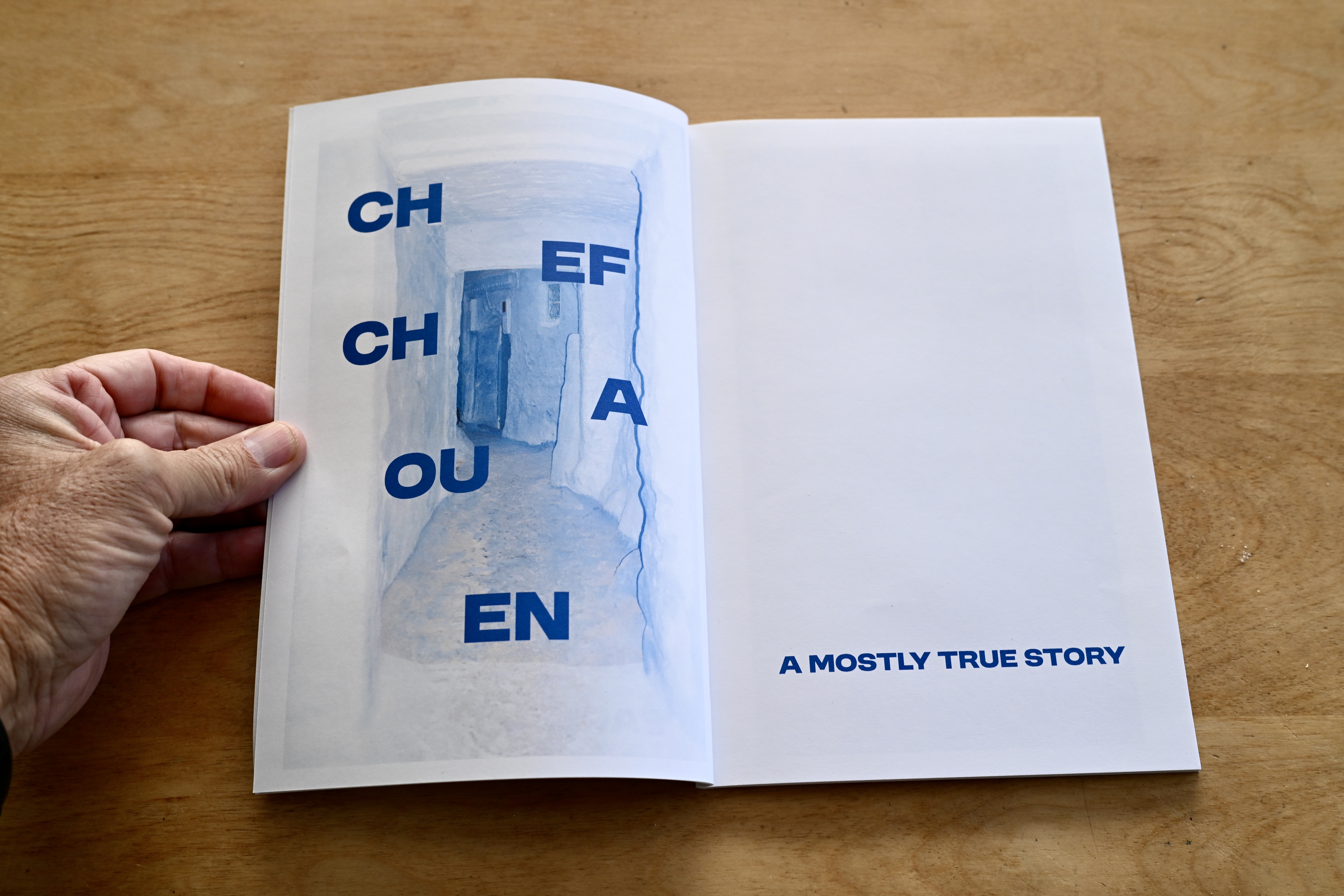
This book took no more than thirty minutes to produce. And remember, this is a sample book. Just something to illustrate a combination of materials. This is not a portfolio or me saying, “Look how great I am.” This is a roadmap. Nothing more. I’ve found over the past few years, if I don’t build a roadmap, many folks find reasons NOT to do something. When I present a roadmap, the ball shifts back into the other court. “Oh, he’s already done this, so maybe I should step up and do something too.” (The best creatives don’t need any prodding.)
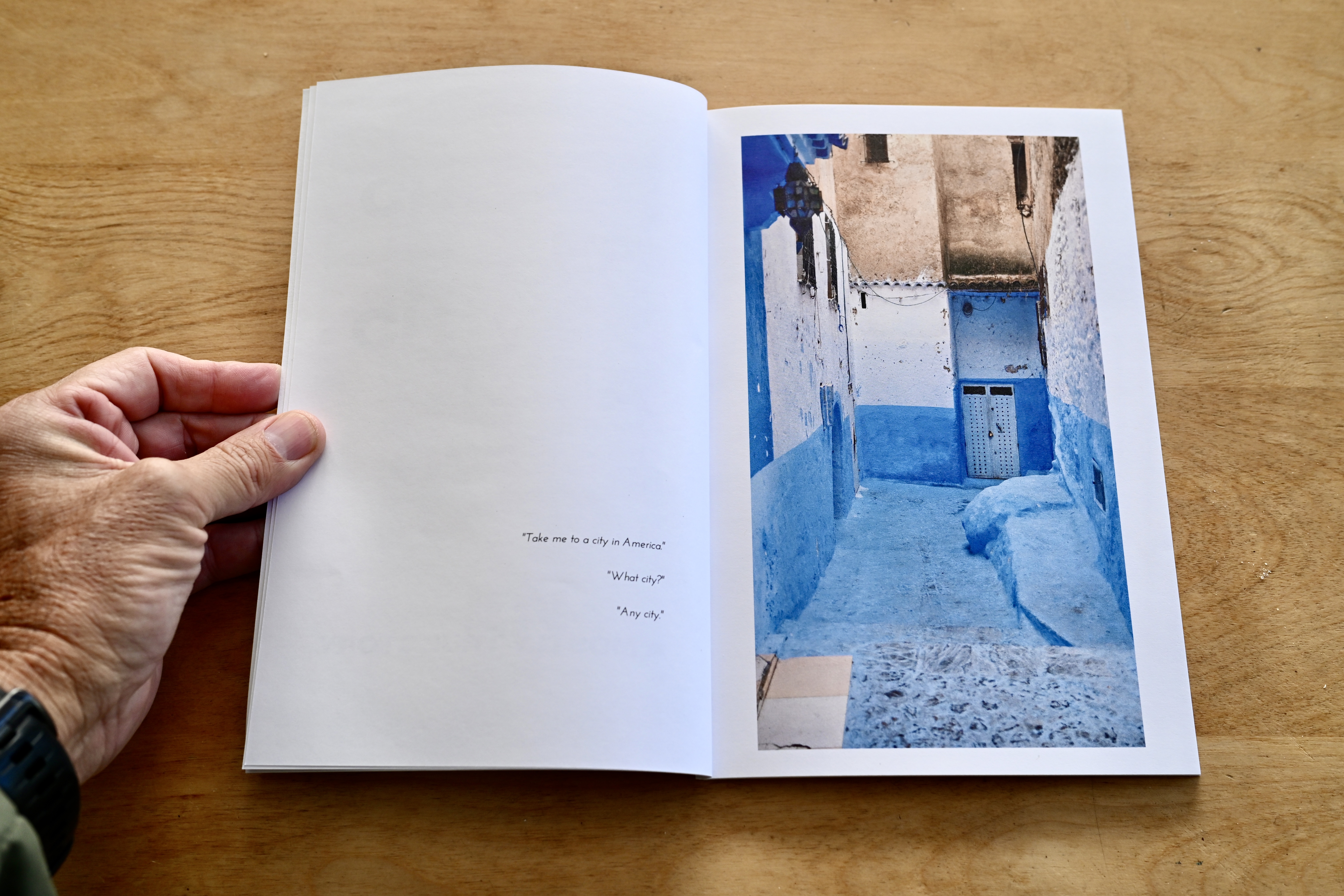
On a sidenote. That built-in flash on the Fuji X100VI is worth its weight in gold. It is SO handy. I also like the choice I made to shoot 16×9. I’ve not yet had the time to incorporate these images into a film, but I will. I can see continuing this in Patagonia on my upcoming scouting trip. This trip is getting me extremely excited. So, what’s the takeaway here? Make books? Yes. Make test books? Yes. Trade Books are the bomb? Yes.
Comments 8
I never thought I would hear from any pro that they loved on-camera flashes. Can you please explain where you used it and how?
Author
I wouldn’t call it “on camera” with the Fuji, it’s more “in camera.” It’s built in. Tiny. It works magically in two ways. One, as a fill light, filling shadows. Two, as a plus 2/3 overpower of existing light. I use it both ways and it’s awesome. I do have an on camera flash, which I used for all of my Japan work.
I love the way you incorporate text. Right now, I use Lightroom for my Blurb books. I need to play in Bookwright so I can begin experimenting with copy, or Adobe InDesign.
Author
That’s one reason I don’t use LR. It’s great for simple, portfolio style books, but text is essential. I don’t really look at many picture books anymore. I need story. So type and overall design are critical. For this, BookWright and ID are the best.
I went to Chaouen for the first time many years ago during winter. The town was almost empty of visitors, and for a reason: it was freezing, particularly at night in the cheapest room I found. But wandering through the city by myself, getting lost in the tiny blue alleys, and ending at the traditional café at Outa el Haman square (full with man drinking green tea, obviously) was such insightful experience.
This year I returned during Easter time. I left my bag in the hostel and went immediately to walk the streets. I was surrounded by souvenir shops, restaurants aimed at tourists and, tons of instagrammers-wannabe trying to get pictures “of themselves” being fancy, often queuing to get the same picture in the same gate with flowers. Someone even sold a tour with portraits in the best viral locations. The old café in the main square was now a restaurant offering pizza-pasta-burger & tiny selection local greatest hits for the adventurous.
Because I liked photography, someone recommended to go to Bouzafer Mosque in the hill in front the city for the best sunsets. I peeked in the distance the mosque and watched in horror about a hundred people gathering for the sunset.
So, after 30min, I decided to leave. Not only the city had changed in all these years, but Easter is high season, so I found something I wasn’t looking for. I went to the bus station but found there were no buses heading to Tetouan that day. Resigned, I came back to the hostel, but I got one of the best pictures I had from that trip when I got lost in the alley with no exit. The buildings, the drying bedsheets and the sky perfectly aligning in blue hues. You get lucky when you less expect it.
Next morning, I woke up at 5am trying to avoid the people and yes, I got what I was looking for. Empty streets, closed souvenir shops, I only met those commuting to work and someone who offered me to smoke hash (not my thing). Luckily, waking up early helped me to avoid the crowds, although I felt a bit lost when the tourist monster woke up.
I’m happy I didn’t find a bus leaving the city.
Author
And remember. Your job is to document what’s there. Crowd, no crowd, tourist, no tourist. Don’t get too choosy. Just shoot. I made at least two images at that mosque that would be in my final edit. It was a goldmine for images.
Re: Document what’s there. I ran into a similar situation to Eduard on a recent trip to Rome and Florence. Tourists everywhere consuming culture while obscuring the view with a surfeit of selfie sticks. So I made like Martin Parr and documented them. Got some great shots.
Author
Yep, shoot what’s there. That’s the job of a photographer.