

I am not a street photographer. After my recent post about a single image from Cambodia, several people wrote asking questions. A typical question began with something like, “When you were doing street photography in Cambodia, did you do “X?” This is a perfect teaching moment, and a good chance to expound on something I mentioned many times on my YouTube channel. There is a significant difference between doing documentary photography and doing street photography. I’ve referred to this as “attached” vs “detached,” photography. For some reason, I’ve focused my entire career on doing “attached” photography. Having said that, I want to be clear that both styles of shooting are entirely valid. What I do is my business, what you do is yours. But back to the teaching opportunity. I realized my work in Cambodia is perhaps the perfect body of images to better explain the difference between doc and street, at least in my mind.
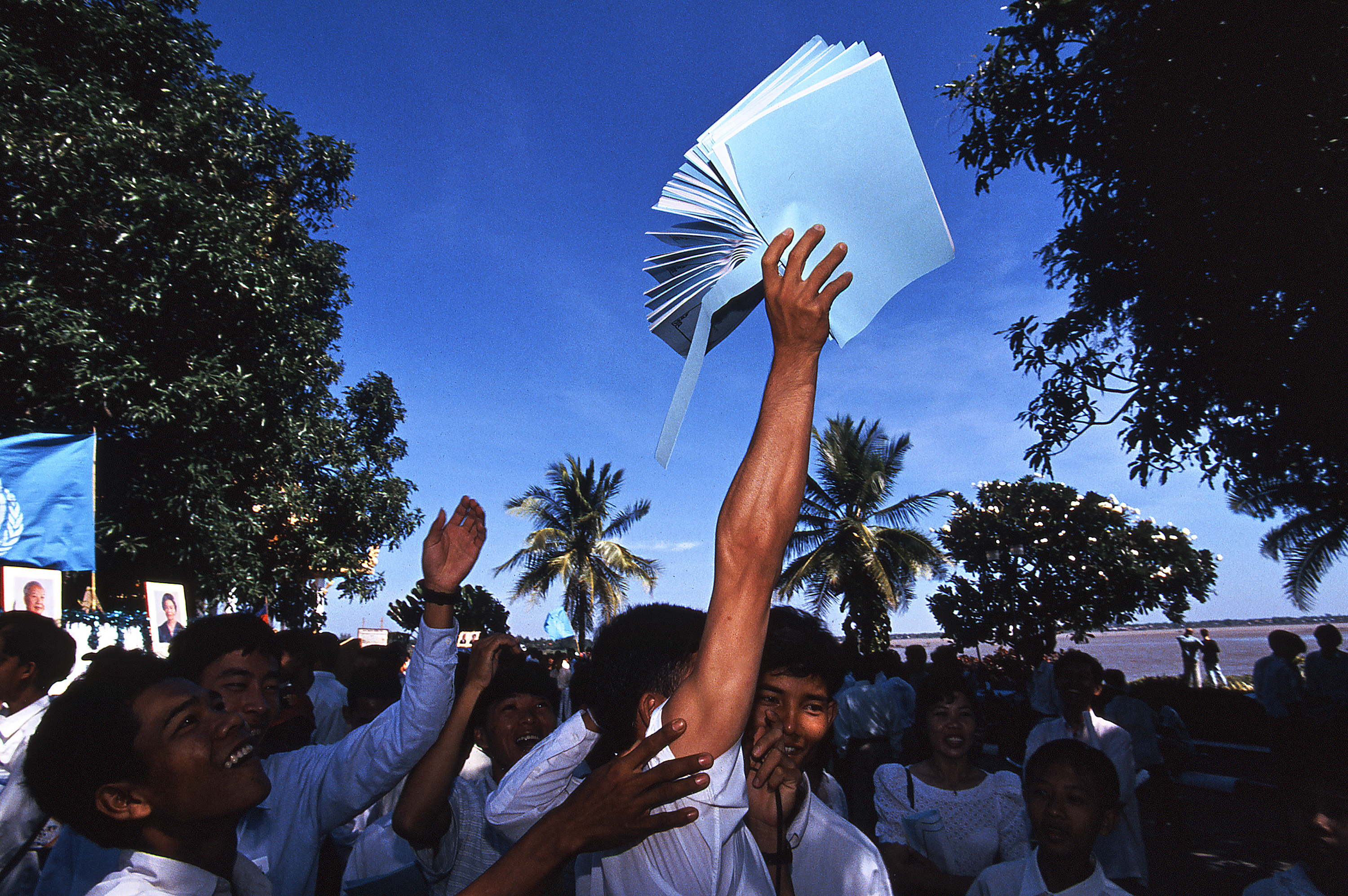
First, I went to Cambodia on assignment.
I’m sure someone out there is being sent on assignment to do street photography, but I haven’t personally met anyone who has had such an opportunity. Editorial photographers, or those on assignment for an NGO or organization of some sort, typically have specific targets, topics or shot lists that comprise the story they are being assigned to tell. It’s not often a client says “Just go and wander around, we don’t really have a specific story.”
My assignment came about in the most random of ways. I was living in Southern California, and my parents came to visit. In my twenty-five years in Southern California this was the only time my parents ventured west. They detested California, and told me so less than twenty minutes after landing at Orange County. This is another story entirely, and one I find hilarious, but very true to who my parents are. “Too many people,” my dad said before we even got to my house.

My mom is the person responsible for my love of the bean, so early one morning we went for coffee in Laguna just downhill from my house. As usual, the place was packed. Mom and I lucked out and found a four top outside on the patio. Several minutes later a man and woman emerged onto the patio with their coffee and pastries. Only issue, no open tables. Because I had good parents and because I’m a nice person (debatable) I said “Hey buddy, sit here with us.”
This would prove to be a pivotal moment.
As you do in a situation like this, I asked what he did. “I’m a lawyer in the Bay Area but I spend most of my time in Cambodia.” My heart began to palpitate. I had just returned from a month in Guatemala attempting to work on a story about repatriation of Guatemalan refugees from Southern Mexico, and I wanted more of the documentary life. “Cambodia,” I said. “I became a photographer because of the photography made during the Vietnam War, and Cambodia has been on my dream destination list ever since.” “Well,” he said. “I just so happen to need a photographer.” Boom. Right there is where the assignment and the story began. I now had borders. I now had parameters and I had a backbone of a story to begin to research.
This man was a well known public defender who had undertaken several high profile cases during the 1980s. His initial visit to Cambodia in the early 1990s was strictly for vacation, but after arriving in country he began to realize there was a major transition happening. The country was slowly beginning to emerge from decades of war and Khmer Rouge control. The idea of a legal system or laws governing daily life were a mystery to many of the Cambodians he was meeting and speaking with. When he inquired about law schools, the response was “There are none.” Boom. This is where his story in Cambodia began.
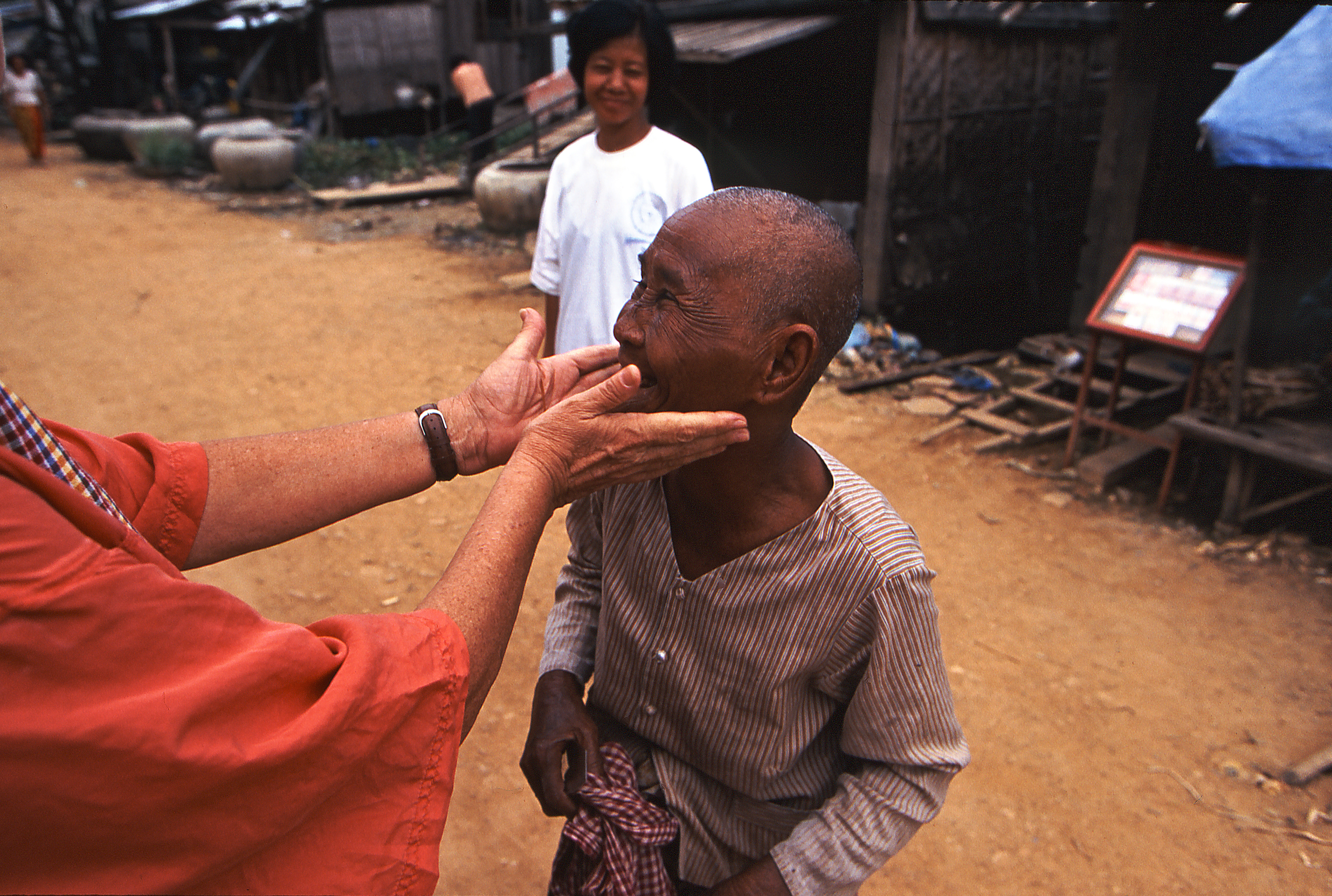
Returning to America, he reached out to many of his friends in the legal world and said “We need to help Cambodia build a law school, and we need to teach Cambodian law and then we need turn the entire thing over to local Cambodians.” “And we need to self-fund the entire project.” This guy being who he was, and having the clout he had, this is precisely what happened.
I was hired to photograph the law school, the educators as well as the surrounding environment that was connected to the building of the school. This covered things as wide ranging as disease eradication to NGO’s working in tandem with the United Nations. What does the mean as a photographer? It means that the vast majority of the days I left my hotel, I was leaving to meet with specific people covering specific stories that all fed directly back to the main idea being covered. What it also means is that I wasn’t just wandering and shooting.
There were days I had time between assignments and did venture out to various places, but all while considering how the images played into the story I was covering. I also knew that the client could use imagery that would illustrate what daily Cambodian life was like because I knew Americans had little knowledge of the region even after our foray into Vietnam in the early 1960s.
A documentary photographer needs time and access, and they also need connections.
These connections can come from being in the field and making them on your own, or they can come from a contact or point person, which is what happened in Cambodia. I was introduced to local politicians, journalists, Americans and Europeans running NGO’s, medical teams and more. I was introduced and then it was up to me to make dates and times for photography, which I did. Looking back, it feels incredible that any of this happened. I don’t even remember how I communicated with these folks. I had no phone in my hotel room, let alone a mobile phone although many Cambodians did have mobile devices. (They bypassed attempting to build a landline network and went straight to mobile, which is why they were so far ahead of the United States.)
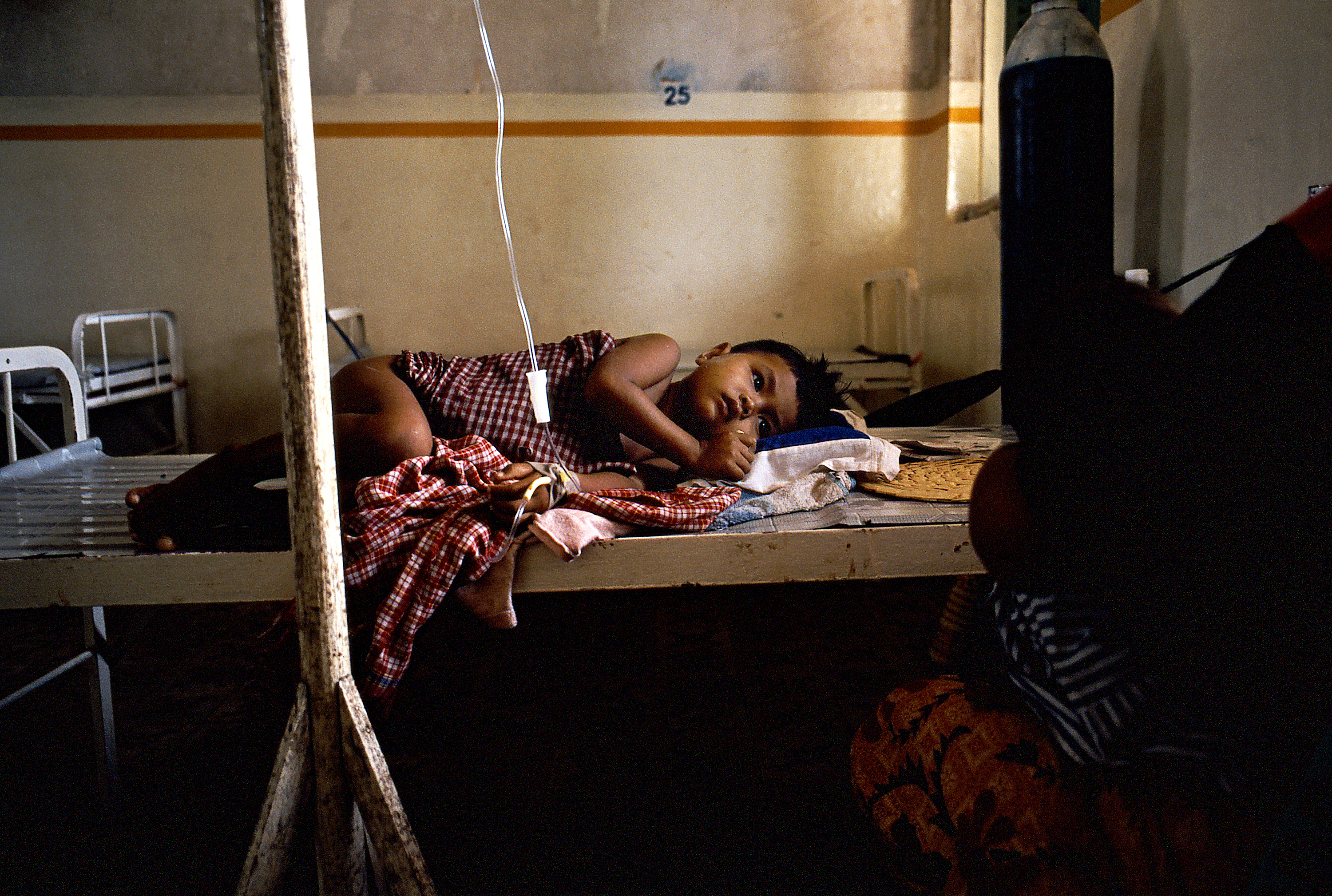
Slowly, over the following weeks I began to build my story. The law school was easy and was the perfect warmup for what was to come. The school was a physical space, had boundaries and borders and faces and was easy to see the edges of. When I began to branch out into the country at large, things got more thrilling and far more complicated. I had to be ready to roll at all times. I shot images in the middle of the night and I shot images all during the day, and in every kind of weather imaginable. Many of the days I didn’t know where I was going to end up at day’s end or where I was going to sleep, or even how I was going to get to where I needed to be.
This was a tricky time in Cambodia. My work around Phnom Penh was relatively easy. There were moments of danger but mostly mid-grade risk. Once outside the city, however, things were way different. One of my assignments was in the far south outside a town called Kampot. Two weeks prior, two foreigners were killed on the road leading out of the city to the south, and when I went to the pot market in Phnom Penh to arrange a taxi to Kampot, I was met with one driver after another who said “No way I’m driving there.”

When I finally found a willing driver, he said “Lay down in the back seat.” “I’m going to drive a hundred miles an hour and I’m not stopping for anything.” “Most likely we will get shot at.” It’s difficult to explain, but this was not only not a deterrent, this was perversely satisfying. Maybe it’s as simple as making you feel alive, to use a horrible cliche. Maybe it was a statement about living in an uber-manicured environment like Laguna Beach. (I moved shortly after returning from Cambodia.) We made the high speed pass, and if anyone shot at us, they did so without effect.
During my time in the south I covered an NGO run by an American woman who taught amputee victims chicken farming and motorcycle repair, useful skills that would allow them to become functional members of society. I connected with a local journalist on a semi-scary visit to a Khmer Rouge defector camp. We were told we needed to get in and get out because the road to camp fell under Khmer Rouge control once the sun went down. Our 4×4 became bogged and it looked like we were going to have a long night when four men with RPG’s stepped from the jungle. I looked for an escape route while the journalist raised his arms in the air. Thankfully, they were Khmer Rouge defectors who had come to help us extract the vehicle. (Which we did with an ox if I remember correctly.)
One of the warnings I heard from the moment I landed in Phnom Penh was, “Don’t ride the train, and REALLY don’t ride on top of the train.” What train? ANY train. But in the age of competitive travel, two Australians decided to push their luck. It did not end well. The Khmer Rouge pulled them from the train and attempted to ransom them. The government didn’t respond and subsequently the two were executed. During our visit to the defector camp, the journalist questioned a man about this event. “We asked for a ransom but didn’t get it.” “We said the men would be killed if our ransom wasn’t met.” “It wasn’t met, so I killed them.” Yep, he admitted right to our face that he was the one that had done the deed.

Returning to the city, I ventured out with Maryknoll sisters on a polio eradication mission. I also took time to write as much as possible. I would get up early and walk to a restaurant near the Royal Palace where I would write and eavesdrop on whisky salesman and other vultures looking at a new, ripe, quickly opening Cambodian marketplace. I also spent more time working with the legal team as they ventured into the city holding events to advertise the school.
This is documentary photography.
Although there are opportunistic moments, this is as far from random photography as you can get. This is about story. STORY IS KING. (If I was ever going to get a tattoo, now you know what I would get.) This style of work demands more time and more access than street photography where you could conceivably work all day and never speak to anyone else. There are ways to do themed street photography. Something as simple as a certain color could be utilized, but the vast majority of street photography I see is random. It isn’t that documentary photography means you HAVE to engage with a wide range of people, spending time and building trust, but rather you GET to engage with a wide range of people, spending time and building trust. You know me, I’m a professional introvert, but the relationship and trust required for documentary photography makes it feel like you are fully bonded with the story, the place, and the people. Years after returning, I was still meeting and working with people I met during the trip. (Am still friends with some of them.)

Much of the street photography I see looks more like content than photography. It looks semi-packaged with the usual suspects being repeated again and again. Random architecture, random groups on a street corner, people walking through shadows, etc. While documentary photography provides a much wider image base as well as the opportunity to build depth within each scene. I’ve written about “picture packages,” many times before. Each scene of a documentary is fertile ground for a package. Link these packages together and you have your narrative. Once you have your narrative, you have your book. Rinse and repeat.
Teaching workshops allows me to get on a plane without needing a story. I get to watch others work and then help them with editing, sequencing, making adjustments, bookmaking, etc. (Yesterday, I got an amazing handwritten letter from a student who explained how what he learned during my Peru class is now influencing his current work.) But if I’m not teaching, I don’t get on a plane, or get in the van, without having a story to focus on. I read a lot. I study a lot. I’m a curious person. All these things make it very easy to find a good story. Having passion helps too.
There are downsides to documentary photography.
Documentary photography isn’t scalable for rapid, online success. The reason why there are so many street photography channels on YouTube is because street photography is easy in comparison, it can be done most anywhere, requires little interaction and produces work the minute your feet hit the street. Documentary photography takes time, a lot of time, thus making it nearly impossible to scale in the world of immediate, online currency. At the moment, I’m attempting to gain access to a cattleman who works on the Mexican border. Even if I’m able to gain access, it will take weeks or months before I have something tangible. For me, this is normal because I look at long-term project in terms of years not days. Imagine having a YouTube channel where you can’t post anything new for weeks or months at a time. (Another reason I can’t wait to get away from YouTube.) You can’t facade documentary photography.

Documentary photography also requires planning, gaining access and building trust. Labor intensive, fickle adventures that often ebb and flow depending on a range of impossible to control factors. I’ve gained and lost access minute by minute on certain projects and it can be incredibly frustrating. My project about Islam in America proved too difficult to continue due to this very thing. Three years into the project I had to pull the plug after spending copious time and money attempting to tell this story.
Budgets and timelines are down. I have a new favorite expression. “Dumber by the day.” This is how I feel about the world at large. Not all of it, but much of it. The bulk of our population likes really dumb things. Reality TV, social media, radical politics and buying as much unneeded, poorly manufactured goods as possible. Consequently, the demand for long-form, in-depth projects is down. Some would say nearly nonexistent. People seem to want to be distracted more than anything else, and stories about the real-world are often dull in comparison to silly animal films on TikTok.
You have to know going in, no matter how good your story and how good your work, most people will not care.
There is no real payoff in documentary photography, outside of personal fulfillment. You won’t become wealthy, you will have to battle for funding and you will be greeted with a constant barrage of “No’s.” Even explaining a project to someone you want access to can be a difficult experience. Most people don’t do this kind of work because it’s simply too difficult.

But when it works it is pure gold. Literally, like finding gold. You dig all day for weeks, months or years at a time and then suddenly you discover a seam. And it’s just enough gold to keep you digging for another day. After enough time on a project you begin to see and feel connections taking place. Those images begin to link together, first in your mind and then on the light table or monitor. Eventually, a highly refined version of the work lands on the printed page and now you have tangibility on your side. Your work no longer belongs to you. Your work now belongs to everyone involved in the story. Being cemented on the page ratchets up the meaning.
There is no right and wrong path here people.
Street photography might fit your desires and your time commitment. Documentary photography might be something you try after a few years of doing street photography. Or, you might decide to become a shut-in and just focus on selfies. Doesn’t matter. Hopefully, this little story will help you better understand what I mean when I refer to documentary photography. It’s been a love of mine for over thirty years, and hopefully it will remain a love for another thirty.
- Leica M4P and 28mm
- Canon EOS 1, x2, with 20-35mm and 70-200mm
- Film used: Fuji RDP I
- Number of rolls used: 25
- Total time in country: three weeks.
- Approximate number of sub stories used to build main story: six.
- Exhibitions: 1
- Subsequent publications of the work: 3
- Books created: 1
Comments 34
Dan, when did you live in Laguna? I was there from about 1963 to 1972. This is where I met Art Brewer, which I know we knew in common. Did you know that Lewis Baltz lived up the road in Newport Beach; I think he was about 5-10 years before me. And, not sure if it was still around when you were in Laguna, but I worked at a camera store there in town (Bill Thomas Cameras) from age 14 to age 19 on weekends, and the summer. Small world.
Author
I was there from 1996 to about 1998. It got far too small for me. Too white, too limited. And the traffic going in and out was incomprehensible.
Thanks for sharing. I’m just reading. The Proud Highway. The Fear and loathing letters volume 1. 1955-67
I’m just into the early 60’s. And Hunter has spent 8 months or so in South America writing for the National Observer. The ups and downs of his experience based on the money he had, the situations he got himself into. He was a prolific letter writer. And photographer when he needed to be.
Point of the story I guess is in a foreign country you never know who you will meet and where you will end up.
Author
EIGHT MONTHS. Right there is the key. Total immersion.
The reason I went to Cambodia (with only a Leica M6 and a bag full of film) over ten years ago now is because of a Smogranch post about your time in the country (I think we may have Skyped about it years ago). I came back with some of my favourite images I’ve ever taken but then saved them all with a stupid Lightroom preset that’s baked in now. I might have to re-scan the whole lot.
I love the idea of documentary photography compared to street. I’ve had two or three failed projects over the years that I’m completely at ease with. I learnt a lot, they didn’t work, so I moved on. Incidentally two of them had a strong component related to Islam in Japan. I had no ideas for new projects for years, but then just last Thursday completely out of nowhere a new one popped into my mind and I’m really excited about it. And yes, I may well be the only one that gets excited, but I couldn’t care less.
Author
Ha, I remember that. It was everything I was hoping for and more. And it was interesting, albeit selfish, to watch a country changing on a daily basis.
“If you do, you are no longer a documentary photographer. You are in advertising”
I choked on the tea I was drinking while reading this. Haha! Please tell me that came from a speech you made at some point.
Thanks for the shoutout in your audio episode yesterday 🙂 YouTube is a struggle for me (I loathe it) but podcasts are great. Mainly because I can turn the phone screen off and listen while doing other things, like procrastinating.
Also I am commenting about another post on this one because I’m lazy.
Author
I’ve said this many times, here and there. I keep seeing photographers move the digital goal post further and further away from reality. Taking things out, moving things here and there. That’s all fine, unless you need a stranger to believe in your work.
“That’s all fine, unless you need a stranger to believe in your work.”
For that we now have AI
Author
How do you know it was even me on the phone the other day?
Amy was my verifier 🥰 AI can’t clone her… Yet
Author
Good point.
That was the most concise and enjoyable explanation and example of documentary photography I have read. I would encourage everyone to take advantage of those chance encounters. Once many years ago I was a bartender working my way through college. A guy a little older than me started coming in every afternoon for a couple of drinks. We started talking and he was a freelane photographer visiting family in town. I was totally captivated by photography at the time, struggling to find out if it was something to do for a lifetime. He told me he was leving in a few days for an assignment covering the Intifada in the West Bank and could use an assistant. If I provided my own transportation and camera(s) he would supply me all the film and processing of images I made. I could swing the expenses but sadly I waffled due to school and girlfriend. What a fool I was. I Still photograph the ideas I love but often regret not taking that one opportunity offered me.
Author
That is crazy. But so typical of the time. And typical that the photographer spent copious time in the bar….
That was a good read, and very educational too. Once again i have stuff to think about. Thanks. It seems that you use the time saved on making films to a good use bringing back the podcast and almost daily updates here. Take it easy we have to keep up and with almost every thing you bring out i will need time to digest it and go over it again. Iam going into the field in two weeks and i have my film box ready to go no i need to get my mind ready.
Akk the best
Frank
Author
Oh ya, this is FUN. YouTube isn’t much fun for me. The next film will explain why.
This is a so worthy replacement for the tube time where you invested in previously, Dan. Digging and finding gold. Thanks again.
Author
Thanks Reiner. Looks like I might be relatively close to you in the coming months. I’ll post when I know more.
Dan. You speak the truth and I respect that. Always have since way back in the day when I read your post about your views on wedding photography. And, as someone who still shoots weddings I really do struggle with the definitions and labels that are on the work we do. I am 100% guilty of playing this marketing game as well. Labeling what I do as “documentary wedding photography” – when in fact ..well…what is it that I / we do as wedding photographers anyway? Isn’t it all “documentary” in nature? By the typical standard I guess it’s not. It’s not long form, it’s ten hours. It DOES take a certain level of skill, empathy, understanding and the ability to gain access during the day, but it’s not really documentary photography is it? I keep those keywords on my site, because guess what – people look for it, but it’s a struggle because I know it’s not “documentary” photography in the traditional sense.
Now, does it even matter anymore? Do the younger brides really care? Do they know? Does it mean anything?
This is the daily struggle, and I turn to your blog and YouTube specifically to hear you speak the truth about photography.
Andreas
Author
Hey, give yourself credit. Wedding photography ain’t easy. And it doesn’t matter what the bride knows or things as long as she, or he or they is all in on you being the photographer. There is a trust there that you have obviously earned.
Pingback: Creative: Bye Bye – Shifter
Our local newspaper, struggling and slowly declining in size, days delivered, and local content has recently added a “Long Story” section on Saturdays. I look forward to those 3 or 4 full pages on one topic. They have been great so far, and I hope this is a feature that lasts.
This is a great subject, and has inspired me for my next visit to South Korea to visit my daughter. I have been 4 times before, and it has been easy to wander about taking photos of all the beautiful, interesting things that are different than home, but you have inspired me to look for photos around a story idea, and the idea came to mind immediately.
My daughter will be returning to Canada, and next month may be the last trip I make there. I have been pondering putting my photos from there together into a book, and now I have a plan which fits well with the places we will be travelling to this time.
Author
Ha, that is what I was hoping for. Take a look at your existing images and try to find a theme you already have but might not yet know about….
You hit a nerve, Dan. By good fortune I cut my teeth as a documentary photographer in high school, in college, then freelancing for a string of small-town papers just as print journalism was entering its death throes in the 1980s and early 90s. I still can’t believe the freedom I was given. I “graduated” to corporate work, public relations, advertising and academia to support a family. Your Creative Live course on documentary portraits several years ago surfaced yearnings to return to my roots. My children now grown and gone, I have the freedom to so do. There is something so real about the gift of taking time to observe, reflect and put documentary stills and words on a page that speaks to the soul.
Author
Time to think, reflect, observe. Just had a conversation with someone about this very thing.
That was a lot of scrolling. Hopefully all that documentary work will end up in some hallowed halls. I keep coming back to the bean. My favorite Leo Kottke song is “Bean Time” albeit a different sort of bean.
Author
Get your scrolling muscles filled out..
This article came to me just a sign. Surrounded by social media, Instagram, YouTube, forums, which constantly shout at me that if you don’t have the latest leica release on the market or if you don’t have thousands of followers, a person like me, an introverted person, Not charming, without economic possibilities, With only a Fujifilm XA2 and a pentax me super ,who lives in a town of 150 people, he will never be able to tell something through photography and be appreciated . Instead, it is the world that is poisoned. That actually a latest model leica is the last thing I want. After reading this post, the first thing I did was buy a book to start studying a project, whether it will start in a week, in a month or never, is not important. Grazie Daniele
Author
Heck, your story is right there. This story and that town. Heck, even one other person in that town. There you go.
Beautifully explained and illustrated Dan. I think Bruce Davidson is a prime example of someone who moves seamlessly between Documentary Photography and Street Photography and has both genres in his mindset and repertoire – from Brooklyn Gang and East 100th Street; Harlem, through to Subway. His Street Photography nonetheless is themed and documents people, place, time and culture. It’s the same approach to street that I take as opposed to just simply taking random shots.
Author
Yes, always a theme. Always edges to the working zone. Not just wandering random neighborhoods jumping out in front of people.
The pictures are all the better for being shot on transparency film. Not because it’s better or cooler but because if it were shot on digital, one would be tempted to open up the shadows and thereby adding more details to a picture that doesn’t need extra details; a classic case of less is more.
Author
I’m not good with photoshop, and I have never liked shadow detail with black and white or color.
Pingback: A Photographer's Guide to Documenting Urban Change in Manchester