
In 2007, I was offered my first two publishing deals. I was green, had no idea how publishing worked, but I knew right away something was wrong. The European publisher told me my audience was in America, and the American publisher told me my audience was in Europe. And they both wanted big money up front. We are talking tens of thousands of dollars, and when I asked what I got for that amount, the answers that came back were vague, opaque even.
Luckily, I didn’t have tens of thousands lying around.
This moment led me to self-publishing, which I quickly learned was the perfect fit for me. I want control, don’t need gatekeepers, and want to work on projects that may or may not be economically viable for a traditional publisher. I want to move quickly and efficiently, and I want to make my book, not someone else’s idea of what my project is.
Since those two offers in 2007, I’ve had several other publishing opportunities, all of which I politely turned down. I’m not against traditional publishing, not at all, but for me personally, self-publishing isn’t a fallback position; it’s my place of control, power, and individual creativity, on my terms and my timeline.
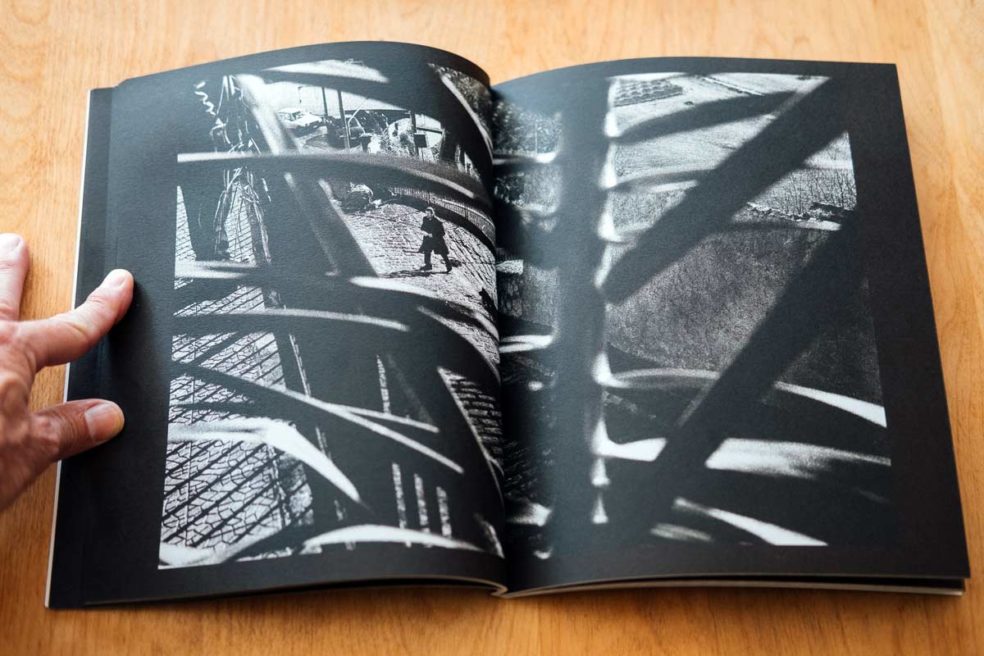
PS: It must be stated that “wordy” books and illustrated books are different publishing worlds. In the illustrated book world, there is a powerful stigma about self-publishing. Although this is fading, it is still very real. When someone self-publishes a photobook, it’s often thought of as, “Oh, that person must not have been able to find a publisher.” Publishers know this and take advantage of unsuspecting photographers by hitting them with massive upfront fees. I would say upwards of 90% of the photobook deals I see are funded entirely or in part by the artist. Most publishers admit this, while others still try to hide the “pay-for-play” method.
Comments 12
Appreciate these insights. I like what you’ve said about control and having the freedom to make the book that you want, not a book that is essentially someone else’s vision of your work. With your background and experience, you already have a great foundation in defining and editing a project. I hope to get there someday – a man can dream, ha! I’m slowly making progress on a couple of my projects and I plan to give self publishing a book via Blurb later this year. The book would just be for me and a few friends and family members, but it’s a start, and very exciting to think about. Cheers.
Author
That’s all you need, a start. And a book for friends and family is enough. One of the best things you can do.
I have a friend that has a contract with a gallery in Paris, but lives and works in Kyoto. He has published about 4 or 5 books, but even on a run of 500 or so he can’t sell them all. And he had to cough up the cash upfront. It doesn’t make sense.
Not even the venerable C. Mod can sell all of his photo-only books.
Author
Historically, photography books have not sold well. There are exceptions, however.
“We are talking tens of thousands of dollars, and when I asked what I got for that amount, the answers that came back were vague, opaque even.” – Well, the answer is obvious: You get several hundred unsold books sitting in your garage.
Author
You would not believe some of the stories I’ve been told by photographers getting fleeced.
I’m considerably new to photography, and your videos and posts have been very helpful. Thanks to your words (“print, jackals, print!”), I started not only a limited series of prints for family and friends but also my own space online outside social media. Would love to attend one of your classes in person if you come to Brazil anytime. Big fan. Thanks for sharing all the knowledge.
Author
Brazil….June 2027!
At this time. I’m only interested in doing photo book for gifts. I’m happy with that.
Author
And that’s totally fine. I mostly do the same. Whatever works for us is what works. No need to be a public superstar. Family is enough.
Thanks for these articles. I am trying to create as many photobooks as I can for myself and my family but I have also found that they are very nice gift to share with people you love.
Author
They are. And a gift that people keep!!