

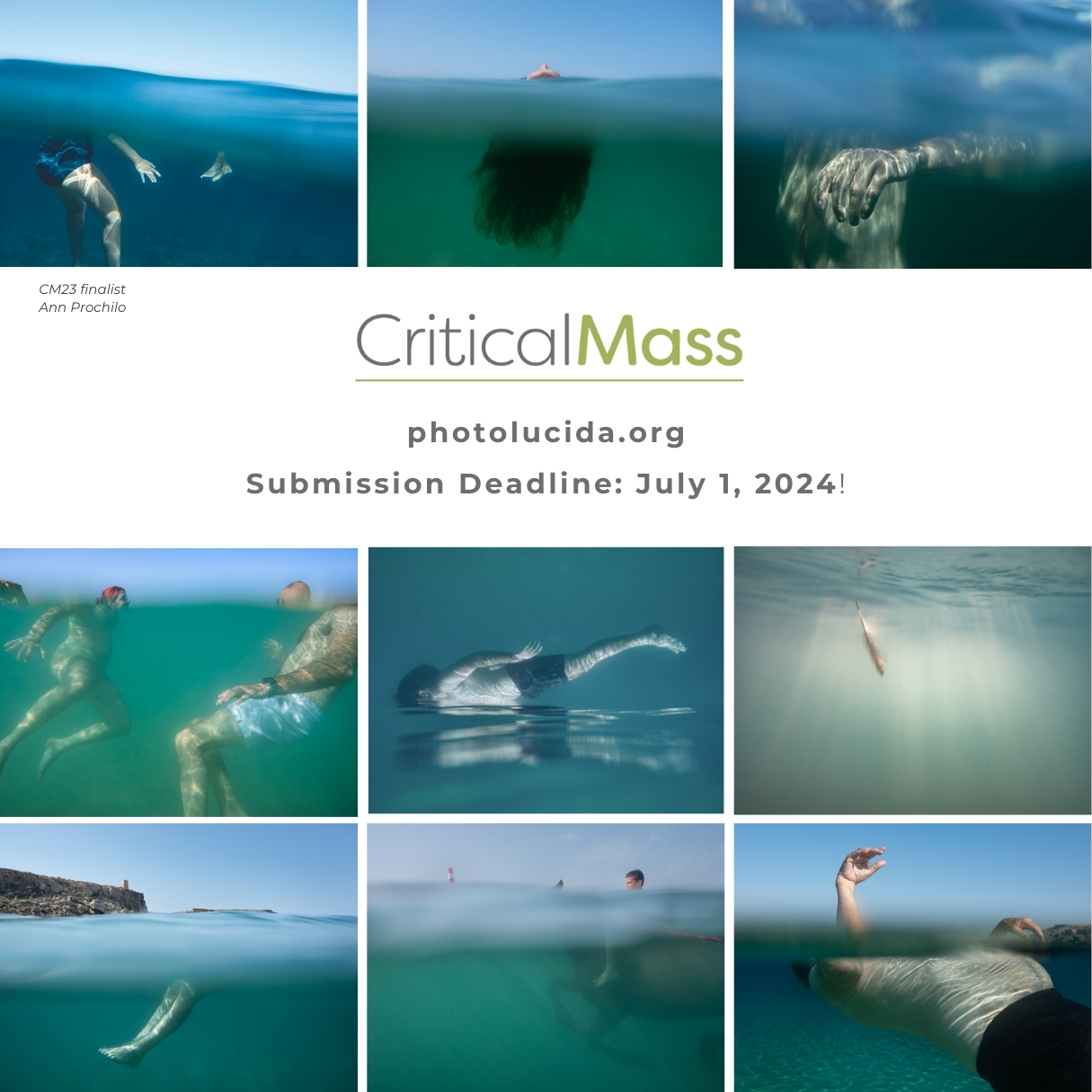
As we head toward the middle part of the year, we once again find ourselves nearing the deadline for Critical Mass. If you belong to the professional photography industry, well, you most likely already know about this and will know whether or not you are going to enter. If you are new to the industry, or a beloved prosumer, then have a look at what Photolucida’s contest has to offer. As you have heard me say before, there aren’t many contests I like. Several decades ago, contests became money grabs, at least to some degree. The number of important contests, things like World Press or Communication Arts, were overshadowed by consumer level events where civilians were tricked into paying their hard earned money to enter only to see the prizes go to well-established, professional types. This is not Critical Mass.
There are several important things to note when entering. Number one, cost. The regular submission cost is $75, or $65 for early bird.(I’ve not yet photographed this bird in the wild.) That might seem like a lot, but in portfolio review terms, that’s nothing, and your work will be seen by a far more than ONE person, so if you average out cost vs eyeballs, this is a good deal. Second, who owns those eyeballs? In my case, you might be thinking “Well, I don’t care what Milnor thinks,” which is fine, but I am only ONE judge in a long list of real, actual, industry types. So, these eyeballs are good eyeballs and not those with the most amount of followers.
Critical Mass is an annual online program that makes connections within the photography community. Photographers at any level, from anywhere in the world, submit a portfolio of 10 images. Through a pre-screening process, the field is narrowed to a group of 200 finalists who go on to have their work viewed and voted on by over 150 esteemed international photography professionals. From the Finalist group, the TOP 50 are named and a series of awards are given. Critical Mass gets photographers’ work in front of top museum curators, gallerists, publishers, editors, educators, artists, and media producers. That’s a lot of eyes. It’s an unprecedented way to get your work in front of the right people! Critical Mass works.
I will end on this note. I looked at two hundred entries. Yep, all two hundred, and I looked at them twice. The first was a quick pass to just take in the work. The second pass found me looking at the work once again, but then reading the artist statement in detail, visiting the artist’s website and then writing a review of their work regardless of whether or not I found their project to my liking. In other words, I put the time in and made sure I gave my feedback. There were several bodies of work that seared themselves into my brain, and I’ve spoken about these projects with my peers and colleagues many times. That work will find it’s time in the sun, and those artists will reap their reward for creating unique imagery. If you have a project, think it has legs, then this is a valid expense. And, entering will force you to make tough decisions about your work. In the end, that alone is worth the price of admission.
Comments 3
Hi. I’m always wondering about the “logistics”. What do you do with old journals? Do you store them on a shelf at home? How do you prevent people from reading them?
Author
I’ve been journaling daily since thirty one years and not one person has tried to read my old journals. And even if they did, nothing would make sense to them. I keep them all, by the way. And use them for doing projects.
This contest looks interesting. I will add it to my goals list.