
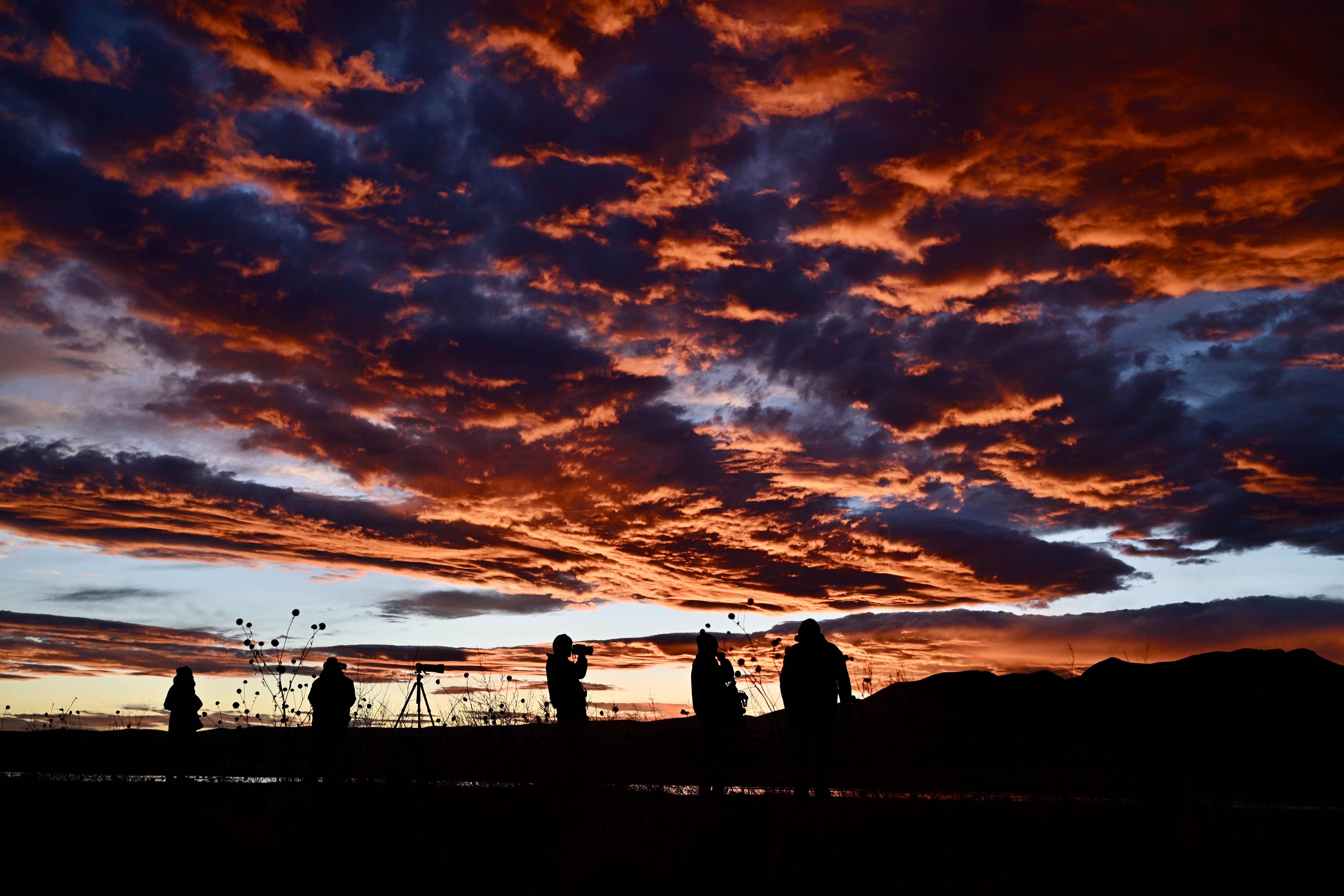
I spend no more than twenty minutes editing a shoot. Okay, if it’s a huge shoot, huge for me, like Antarctica, or the upcoming Patagonia scouting trip, I might spend a bit more time, but on average, I walk after about twenty minutes. I’m telling you this because I recently heard someone say they spend four, five, or six hours on an image, working on getting the color right. Are you out of your mind? Why on Earth would anyone do that? And how can you do that and stay in business as a photographer? This is a modern creation, a modern trend of thinking that this is necessary, perhaps to make the photographer think they are better than they are, or to try and convince us the color is THAT much better than what could have been achieved in two minutes instead of two hours.
There are exceptions.
A friend works with a digital artist to construct massive tapestries that combine hundreds of images into a single file so huge it takes minutes to render even a portion of the final product. These images take weeks to construct. But if you are shooting general content style imagery, which is precisely what this other photographer was shooting, it feels like total nonsense to waste that kind of time. Would you rather be a geek or a photographer?
Thank God I went to photojournalism school, where most of the time we were under some sort of deadline. Pressure. Intense pressure to perform. Newspapers, daily assignments, no time to spare. I still have the same mindset. I’ll give you an example. By the time I left Morocco, less than a month ago, my entire take was already edited and ready to go. I applied BASIC processing to the images. BASIC. There was no need to do more. I’m using a state-of-the-art camera and state-of-the-art software, which means I can efficiently achieve the result I need, and in a matter of seconds, not even minutes. BASIC might include things like setting a white point, midtone bump, and slight exposure tweaks. I don’t sharpen. Why would I need to? Have you seen the files from a state-of-the-art modern camera?
If you are spending hours on your files, you might be missing the point. If you make a handful of portfolio-level images over the course of the entire year, okay, knock yourself out with those few, but rather than spending four or five hours on average imagery, the kind we make the vast majority of the time, use that time to go back into the field attempting to make more portfolio-level images. Photography has always been abused because it attracts the geeks. Lots of retired doctors and engineers. They clog online photo forums, arguing over fluoride elements and pixel peeping observations, but rarely will you find them in possession of good imagery.
On a similar note, retouching was out of control starting in the late 1990s. It has only gotten worse. I once sat in a retouching bay in Los Angeles, watching a highly in demand, professional retoucher retouch a portrait of that year’s winner of a television singing competition. (You all know this person.) The portrait was printed on 11×14 color paper and had a clear sleeve over the top where the photographer had used a grease pencil to mark where he wanted retouching. The clear sleeve was a sea of red. “Whoa, I can’t believe he wants all that done,” I said. The retoucher turned to me and said, “This is the SECOND pass.” “By the time I’m done, there will be nothing real left.” The retoucher then went on to explain how they were doing “cranial reconstruction” on the twenty-something winner. INSANITY.
All of this nonsense attacks the foundation of photography. Photographers spending four hours adjusting color are making images that don’t look real. Light simply does not do what they are making it do. You, HDR photographers, should reread this paragraph again and again. I once saw an exhibition in Panama City. HDR. It was the most god awful looking set of images I’d ever seen displayed. The FIRST thing the photographer said when I asked about the work was, “I’m an HDR fiend.” I should have said, “Don’t be.” If someone asks about your work and the first thing you mention is your processing, you are in big trouble. (Geek for sure.) It’s akin to saying “I’m a film photographer.” No one cares but other film photographers.
The world is an incredible place. It doesn’t need our help or technology to make it incredible. You don’t need to spend four hours adjusting color and layers and masking and sharpening an image of Niagara Falls. It’s fu%$^%$# Niagara Falls! Don’t be that guy.
Comments 11
Hey DM,
LOVE this piece. But sadly, this has been true FOREVER. I remember working in a 1 hour photo lab in a MALL and after getting their prints back, people would ask when the last time was that we “balanced the chem” in the print processor or how many “hours our printer’s bulb has on it”. When I asked to see their “negs” and put them on “the box” and tried to point out how CRAPPY their exposures were coming out of the camera, they then asked about the age of our “C41 chem” when we ran their precious roll of moody semi-porn images through the machine. At that point I whipped out my trusty magnifying glass and showed them that the Kodak VPS III (it was the 80s) edge numbers and words were tack sharp and perfectly color balanced. Their response, “that’s just a trick you all say to convince us that you’re lab isn’t crap. Everyone knows that is meaningless”. They would then storm off.
I’ll just say, Dentists were the WORST.
As they say, the more things change, the more they stay the same …
Best, DS
Yo DAVID! That is hilarious! And, sadly, spot on. I have a story about a roll someone brought to the paper…………..
Pingback: Creative: The Entire Extent – Shifter – Baty.blog
This is what you get when those who have more time than sense collaborate with ridiculously over complicated raw processing software. It’s also a common symptom of photo insecurity.
There is nothing more depressing, yes, it is depressing, to fiddle and faddle with a picture until you just don’t see it anymore. Like you, I had to FTP pictures. As soon as I’d shot a live TV show. All jpegs, possibly delayed for the dreaded ‘photo approval’ straight into Photo Mechanic and uploaded to tomorrow’s newspapers. No time for a bit here and a local adjustment there. Get it right in camera and you barely need a f%@£^n computer.
Sure, for a large detailed comp picture or an ad campaign, it’s expected to spend some time making sure everything is perfect. But for anything else you should be using the computer as a courier.
Imagine how these folks would feel shooting E6 with a deadline, not even time for a clip test, that’s getting it right in camera ! But of course, it’s horses for courses and if you’ve got all day and you don’t have a clue what you want, go fiddle and er, faddle.
They would never make it, but would also never be in the conversation. I think it’s about selling things. Selling actions and preset and tons of stuff that folks don’t really need. And an audience with zero training.
Exactly. I think about who will be seeing my images, and where that will happen. Most are on line, in a blog, probably seen on a phone, for a fraction of a second as they scroll. Well, my readers like me and I know from comments that some of them spend some time with some of the images. For most of the images, the time I spend looking and tweaking can be easily measured in seconds. For these images, good enough is, well, good enough. Nobody can see any extra effort. If it’s going in a book, or someone has bought an image to be printed big by one of the bespoke printers in town, then and only then, I’ll spend some time on it, getting things just right. Even then, that printer spotted a hot pixel I missed, and tweaked things ever so slightly for his particular printer.
That’s my nickname on Friday night. “Hot Pixel.” And yes, if I’m making a gallery print, a bit more time spent.
AMEN! One mo’ time for the people in the back!!!!!
Can I get an amen!
Four or five hours on a single image does seem excessive. That said, “You don’t take a photograph, you make it.” – Ansel Adams. A look at some of the contact sheets of some legendary photographers reveals a massive amount of dodging and burning. Of course, I always try to get a great image right out of the camera, but often I sense what an image can be after processing, when light, distance, or time to get the shot do not allow for perfect framing and exposure at the time. The answer is in the results: if it is a crappy image after processing I have wasted my time. If it is a great image, maybe not. Either way, five to twenty minutes max on an image usually tells the tale.
Darkroom printing is an entirely different matter. The person talking about five hours on a image was shooting average, digital content of buildings and street scenes. Apples and oranges. And again, so much processing that the light looked fake. At that point, just paint.