

I found this in my closet, still in the box. The only thing I can think is that I was going to be tasked with an “unboxing” video, so I kept this baby intact and ready to be revealed. And then I remembered, I hate unboxing videos. But I’m a team guy! I am. I do all kinds of things you probably don’t know about. I was never in the military, but the concept is the same. Protect the person next to you. So, if a team member has an idea about an unboxing video, and I need to play along, you bet your ass I will, and I’ll make the best unboxing video my feeble hands and mind can produce.
What you see here is my Blurb Antarctica Notebook.

This is the BEGINNING of my Blurb Antarctica Notebook. Of the numerous international trips I’ve made in the past few years, Antarctica was the most photographically opportunistic. This doesn’t mean I had any real idea what I was going to do with the work. There were holes in Blurb operations where I could plug these pictures, via blog, email, social, etc. But when it came to me, Uncle Danno, doing something with the work, we were in more of a gray area. How gray? Charcoal? So, let me explain what I typically do when faced with a situation like this.

The first thing I do is edit. I can’t remember my final take, and I’m too lazy to look it up, but just think about starting with several thousand images and ending with several dozen. How many does one human need? And how many will my audience tolerate? I know you people! Were I to talk about my camera kit and which fluoride element I found most interesting while standing on the bow, well, there aren’t enough images in the world to satisfy that guy. Don’t lie! Most of you have the Discovery Channel and National Geographic, and some Antarctica-specific 8K channel blasting to your iPad as I write this. Why do you need me? Short answer, you don’t. And that brings me to my next point. This book isn’t for you. It’s for me. I’m sharing only to share the process. Got ya!
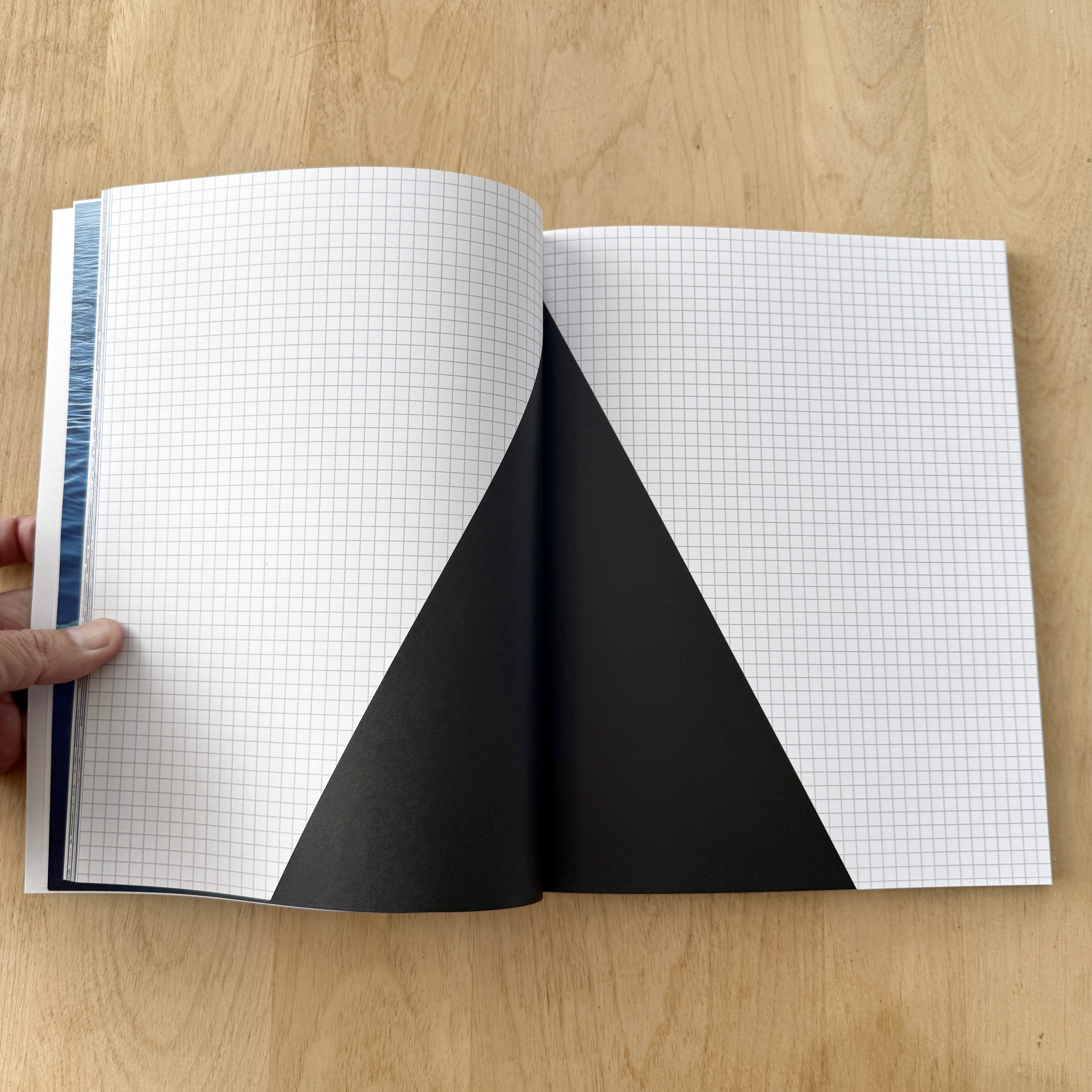
Make an edit, place them randomly in a Blurb notebook of my favorite size and shape, add “more” to it, and begin to assemble something I can live with over an extended period. DON’T OVERTHINK. FORGET PERFECT. This is for an audience of one. Me. Yes, I’m the most important person in the world, but still just one guy. The “more” is a combination of shapes, grid and dot grid patterns, colors, and anything else I feel like adding. I would call this the first layer of visuals. Phase One. Stage One. Alpha Team moving up. The stage that Blurb handles for me through the software and material options.

All of what you see here will be embellished. Like all the stories about my photographic history and exploits. Embellished as much as possible to make myself seem cool. It seems to be working, so I’ll continue to carry on. What Blurb provides here is the foundation. The rest will come later, over time, as I work what must be 100 pages of “stuff.” Here is an interesting reality. When I look back at all the books I’ve done over the past twenty-plus years, many of my fondest memories are tied to these one-off notebooks and journals. Don’t get me wrong, there are other proud moments. My Magic City books created in collaboration with Andrew Kaufman and Chloe Ferres. My one-off art collaborations with other art or photography specialists. And all my edition-of-one books. What I don’t often look back on are the straight books of photography. It could mean my work wasn’t that strong, or it could mean the meaning of photography has changed for me.
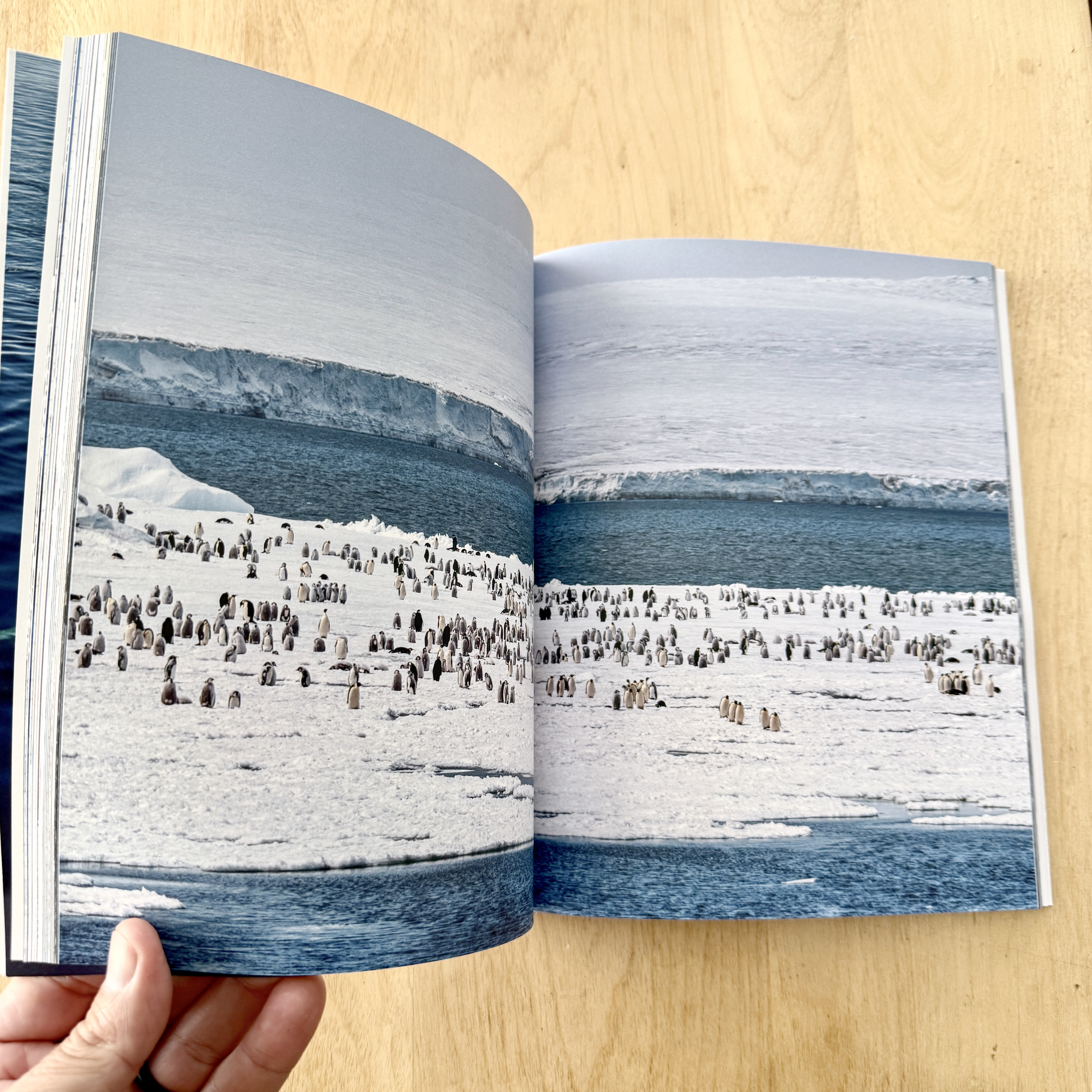
I love this paper and this format. I find this paper takes every kind of material I want to add to it, which is mostly gel pen, acrylic, oil, charcoal, or pigment pens. Some of this stuff takes a lifetime to dry, so I tend to stick to pen, acrylic, and pigment pens. Don’t think I know how to use any of this stuff, it’s just what I have around the old studio. I also tend to carry tape and glue to adhere other unsuspecting materials. The Seattle Light Link rail ticket, for example, has a beautiful little silver line through it. Perfect for offsetting a color photograph. I see these penguins with black ink over them, and it makes me happy. They had it coming!
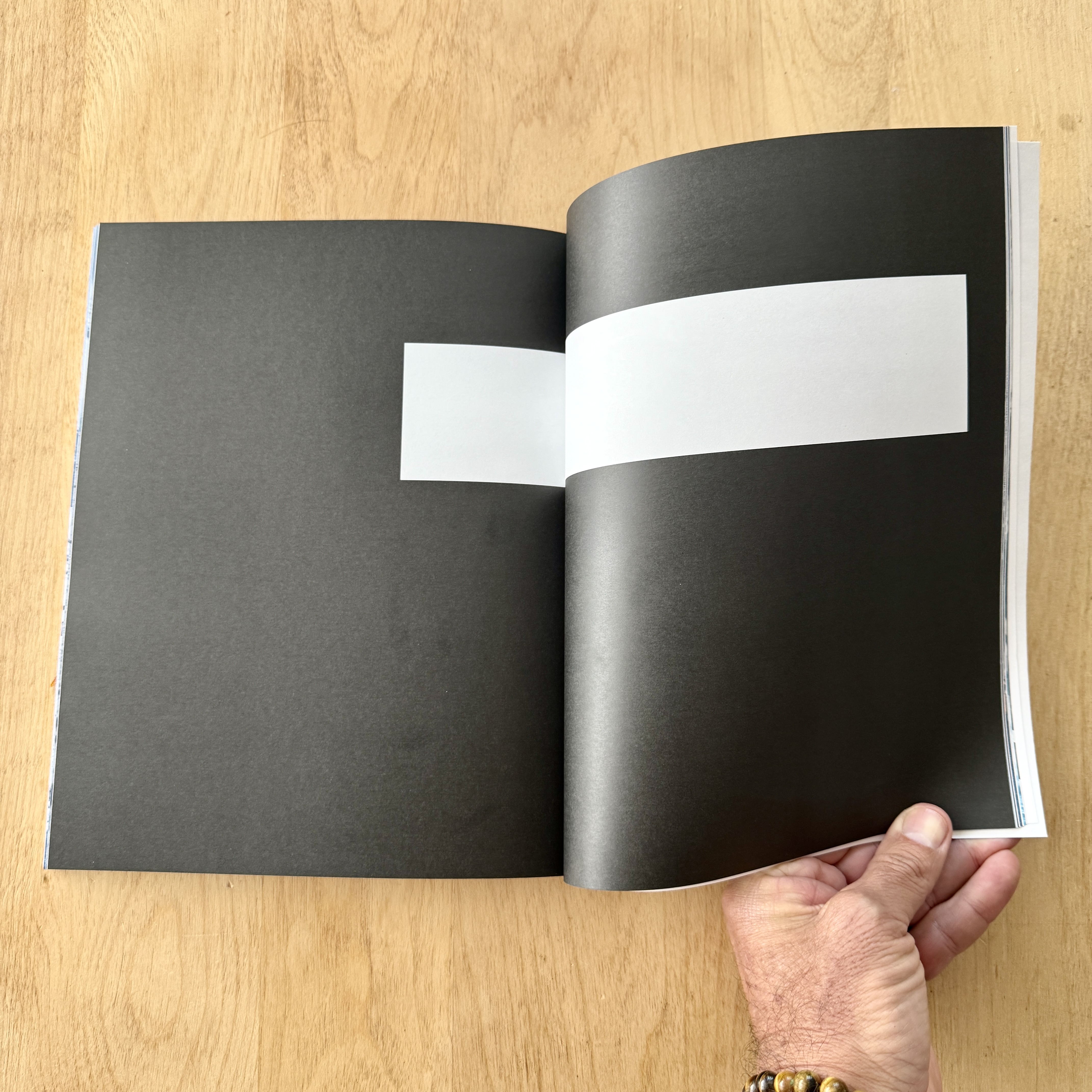
If you have a massive ego, forget this post and move on. This book won’t stroke your ego. Takes way too long and wasn’t built for the masses. Most likely, this book will take at least six months to complete, perhaps more. One of the most important features of working this way is that it slows me down to a crawl. Just adding one page of handwriting can often take ten minutes. Working a spread might take even more. Even if it was a page a day, you are still talking over three months of daily additions to complete the final product. And yes, the more you add, the heavier it gets. Like all print projects, there are a hundred reasons NOT to do this. Too much work, too hard to edit, can’t sequence, fear of not making something perfect, ego telling you that you should do what everyone else is doing, no monetary payoff, can’t focus long enough to do anything for ten minutes, Instagram addiction holding you down. I could go on. I’m not here to tell you what to do. I’m here to share what I’m doing and why. And to remind you how much fun these books are. Onward.
Comments 15
Ditto, that’s exactly what I do, and you are right.
Author
Roger that.
I’ve always been curious of others creative process, thanks
Author
Me too. The BTS of how someone comes to what they make is fascinating.
When you make these journaling books with photos from Antarctica, do you use it to journal about your time in Antarctica? Transcribe from your Antarctica contemporaneous journal? Or does it become a journal of anything goes, your next trip, etc.? Your journals look like so much fun. I can’t wait to try it, but I get stuck in the mindset that you have to write about the photo.
Author
Hey Sherie,
In short, no. Most often, after I return from a trip and make a notebook, I will then begin journaling with whatever is happening in my life at that time. “Stuck” is an interesting term, and one I hear often. Remember, no rules, anything goes.
Purdy.
Am I the dumbest guy in the room to ask what “CTICA” is? Since it’s a book to be shared between you and you….insider knowledge I guess.
ANTAR
Author
The end of “Antarctica.” A wraparound.
“DON’T OVERTHINK. FORGET PERFECT. This is for an audience of one.”
Call me crazy, but in a world obsessed with perfection (I was there once), there’s something beautifully calming about embracing and creating imperfections for yourself.
Author
Perfect isn’t real. Perfect holds SO many people back. It’s a joke.
“Perfection is a moving target.” – Susan Fletcher
I love that quote.
It turns the idea of perfection from a permanent state to one that is fluid and mutable. The only way it could do this is by introducing the element of time. Perfection has to exist in one moment of time in order to then exist in another moment of time.
So what has this got to do with achieving perfection? IMHFO (the “F” is silent in mixed company) everything. If perfection is only a term that applies in a given moment in time then in the next moment it might not.
When I think of the most perfect photograph I ever made the one that always comes to mind is one I took almost 20 years ago in a misty morning of a tree. Was it really perfect? Yes. Did it stay that way? No. If that were true I would not have learned anything about the art of photography since then. But when I first saw that image come off my printer it was, for a moment, perfect.
So that was my take on the state of perfection but what about the definition of perfection itself? In one context its art critics, another its popular opinion, another is the number of likes and monosyllabic comments. The list goes on and on but all of them have one element in common:
Each of these surrender the definition of perfection to everyone and anyone other than you.
If you really want to achieve perfection, even as fleeting as it is, you need to be able to recognize it for yourself. If you give that power away to others you will never, ever achieve perfection for even a moment, regardless any of the many definitions it might have.
Author
Well said. The perfection I refer to is the one assignment by masses of strangers and bots that tend to be what social followers assume are actual people. Creating “perfection” for the other. It’s not real.
Beautiful cover. Love the idea of sequencing pure abstraction with such an abstract part of the planet. Can’t wait too see the journal in its entirety. Very much enjoyed the films you made down there, makes me want to go even more now. One day soon I hope and pray!
Author
This one is going to take a while….